
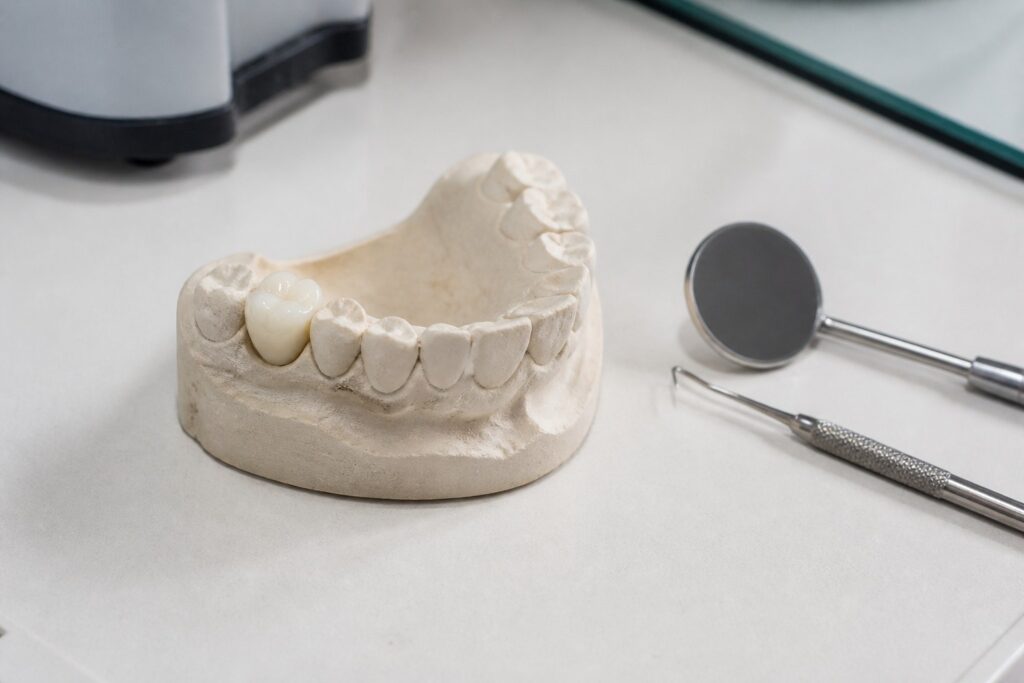
A dental crown covers and protects a tooth that has been weakened by a large filling, a root canal, a crack, or significant wear. According to the Cleveland Clinic, a crown typically lasts between five and 15 years with proper care, and a well-maintained crown can last 30 years or more. The honest answer to “how long will my crown last” depends less on the day it was placed and more on what happens to it afterward — the material it is made from, the forces your bite puts on it, and how consistently you care for the tooth underneath.
Knowing what actually shortens or extends a crown’s life helps you protect the investment you made in restoring the tooth, and it helps you recognize early warning signs before a small problem turns into a bigger, more expensive repair.
Average Lifespan by Crown Material
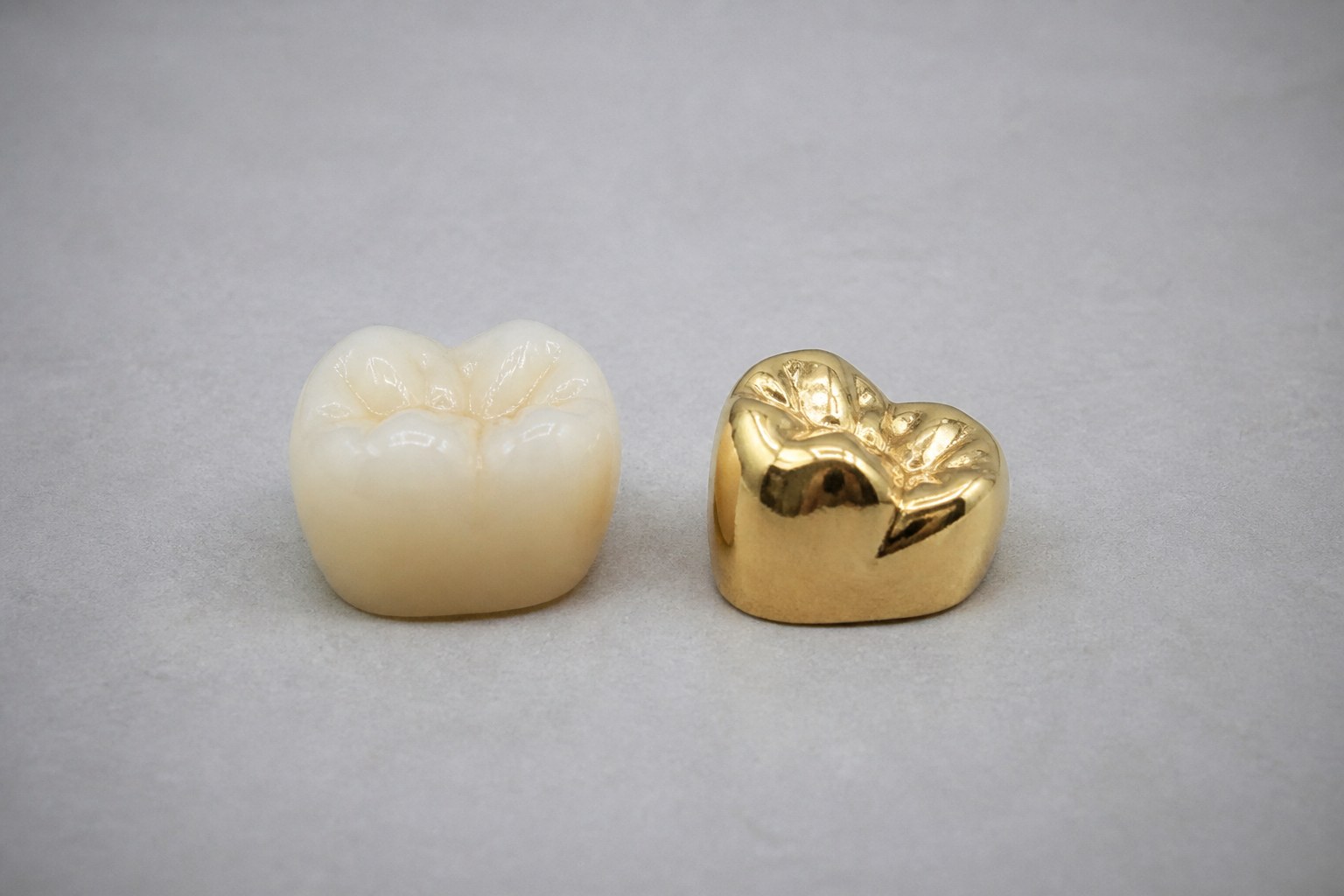
Not all crowns are built the same way, and the material has a real effect on how long you can expect one to hold up:
- All-ceramic and porcelain crowns (including Emax): generally last 10 to 15 years. These are prized for how closely they match natural tooth color, which makes them a common choice for front teeth and other visible spots in the smile.
- Porcelain-fused-to-metal crowns: often last a similar 10 to 15 years, combining a metal substructure for strength with a porcelain layer for a natural-looking surface.
- Full metal or gold crowns: frequently the longest-lasting option, sometimes reaching 20 years or more, because metal resists chipping and wear better than porcelain. These are usually reserved for back teeth, where appearance matters less than raw durability.
Material is only part of the story, though. Two people with the exact same type of crown can have very different outcomes depending on the factors below.
What Shortens a Crown’s Life
Certain habits and conditions put extra stress on a crown, or on the tooth and gum tissue supporting it:
- Teeth grinding or clenching (bruxism). Constant pressure, especially overnight, is one of the most common reasons a crown chips, cracks, or loosens ahead of schedule.
- Chewing ice, hard candy, or using teeth as tools. Crowns are strong, but they are not indestructible, and a sudden hard impact can fracture porcelain.
- Gum disease around the crown margin. If the gum tissue at the edge of the crown becomes inflamed or recedes, it can expose the margin to bacteria and decay.
- New decay at the edge of the crown. A crown protects the top of the tooth, but the seam where it meets the natural tooth can still develop a cavity if plaque builds up there.
- A bite that was not fully adjusted after placement. A crown that sits slightly high can take on more force than it was designed to handle every single time you bite down.
Why Location in the Mouth Matters
A crown on a back molar absorbs far more chewing force every day than a crown on a front tooth used mainly for biting softer foods. That is part of why dentists often recommend a stronger material, like gold or a reinforced ceramic, for molars, while reserving the most natural-looking materials for front teeth where the cosmetic result matters more. A crown placed on a tooth that already has a large filling or a root canal underneath it may also need a bit more monitoring, since the remaining natural tooth structure supporting the crown is thinner than it would be on a tooth that only needed the crown for a minor chip. Our E.max crowns use lithium disilicate, a reinforced ceramic that combines strength with a natural look.
Signs a Crown May Need Attention
Between checkups, it is worth paying attention to how a crowned tooth feels and looks. Contact your dentist if you notice:
- a rough edge, chip, or visible crack in the crown;
- new sensitivity to hot, cold, or sweet foods in the crowned tooth;
- a crown that feels loose, shifts, or rocks slightly;
- persistent bad breath or an unusual taste near the crown; or
- gum redness, swelling, or bleeding right at the crown’s edge.
None of these automatically mean the crown has failed. Sometimes a quick bite adjustment or a professional cleaning around the margin solves the problem. Other times, the crown may need to be re-cemented or eventually replaced — but that is much easier to manage when it is caught early rather than after it breaks.
How to Help a Crown Last as Long as Possible
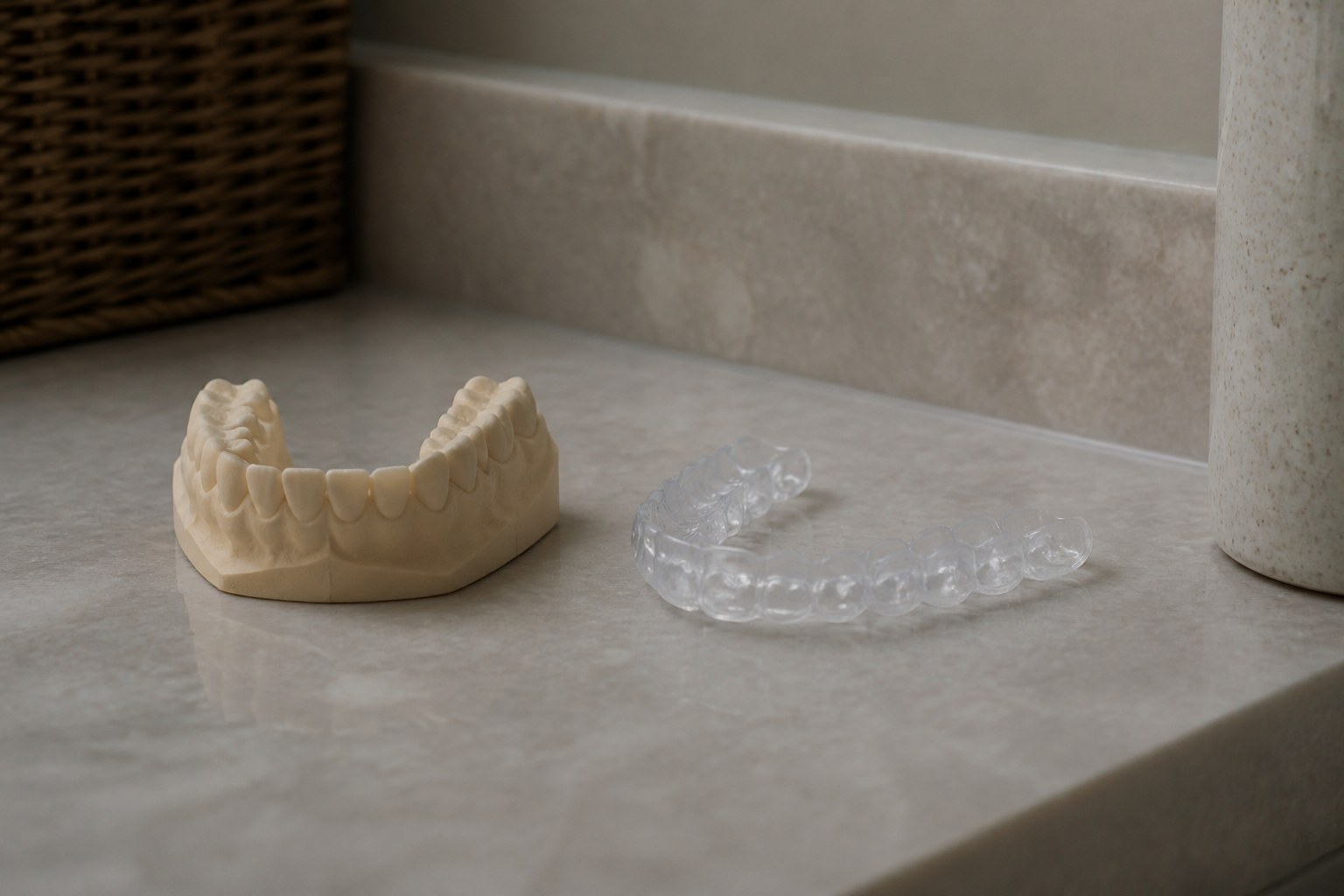
The same habits that protect your natural teeth also protect a crown, with a couple of extra details worth paying attention to:
- Brush twice a day and floss daily, paying close attention to where the crown meets the gum line.
- Ask about a nightguard if you grind your teeth — it is one of the most effective ways to prevent a cracked or dislodged crown.
- Avoid using your teeth to open packages, crack nuts, or chew on pens, ice, or fingernails.
- Keep up with routine cleanings and checkups so early wear or decay around the crown is caught before it becomes a bigger repair.
What Happens When a Crown Reaches the End of Its Life
Even a crown that has lasted 15 or 20 years will not necessarily fail all at once. More often, a dentist notices during a routine exam that the margin has started to open slightly, that decay has crept in underneath, or that the material has worn thin in one spot. Catching that early usually means a straightforward replacement rather than an emergency visit for a crown that has cracked or come off entirely. This is one of the best reasons to keep up with regular exams even when the crowned tooth feels completely normal.
Common Questions About Crown Lifespan
Can the tooth underneath a crown still get a cavity? Yes. A crown covers the visible part of the tooth, but decay can still form where the crown meets the natural tooth at the gum line, which is why flossing around a crown is just as important as flossing around a natural tooth.
How often should a crown be replaced? Most crowns are not replaced on a fixed schedule. Instead, a dentist evaluates the margin, the surrounding gum tissue, and the material’s condition at each checkup, and only recommends replacement when there is a specific sign of wear, decay, or a loosening fit.
Does a new crown need any special care right after placement? For the first day or two it helps to chew on the opposite side if the area feels tender, but a new crown can otherwise be brushed and flossed normally right away. Any lingering sensitivity to temperature usually settles within a couple of weeks as the tooth and gum tissue adjust.
Is a loose crown always an emergency? Not always, but it should never be ignored. A crown that moves even slightly can let bacteria reach the tooth underneath, so it is worth having it looked at within a few days rather than waiting for the next routine visit.
When to Call Your Dentist
If your crown is approaching the 10- to 15-year mark, or if you have noticed any of the warning signs above, it is worth having it evaluated rather than waiting for a problem to force the issue. North Pointe Dental Center checks the fit, seal, and condition of existing crowns as part of routine visits, and can walk you through repair or replacement options if a crown has reached the end of its useful life.
Call North Pointe Dental Center at (239) 997-9949 or request an appointment online to have your crown checked before a small issue turns into a bigger repair.