
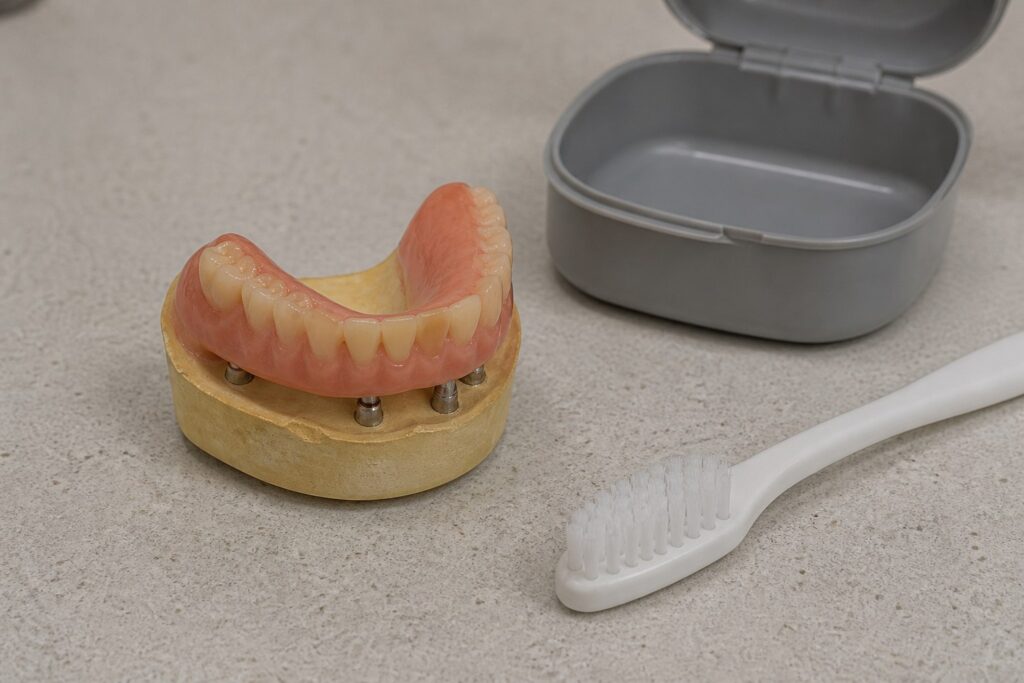
Implant-supported dentures clip onto a small number of dental implants placed in the jawbone, rather than resting on the gums the way a traditional removable denture does. Because they attach to implants, they need a care routine that borrows a little from natural-tooth hygiene and a little from denture care, without being exactly the same as either one. According to the Cleveland Clinic, keeping the implants, the attachment points, and the denture itself clean is what keeps this option comfortable and stable for years. Patients who are new to implant-supported dentures often are not sure whether to treat them like real teeth, like a regular denture, or something in between — the honest answer is a bit of all three.
Clean the Denture Every Day, Off the Mouth
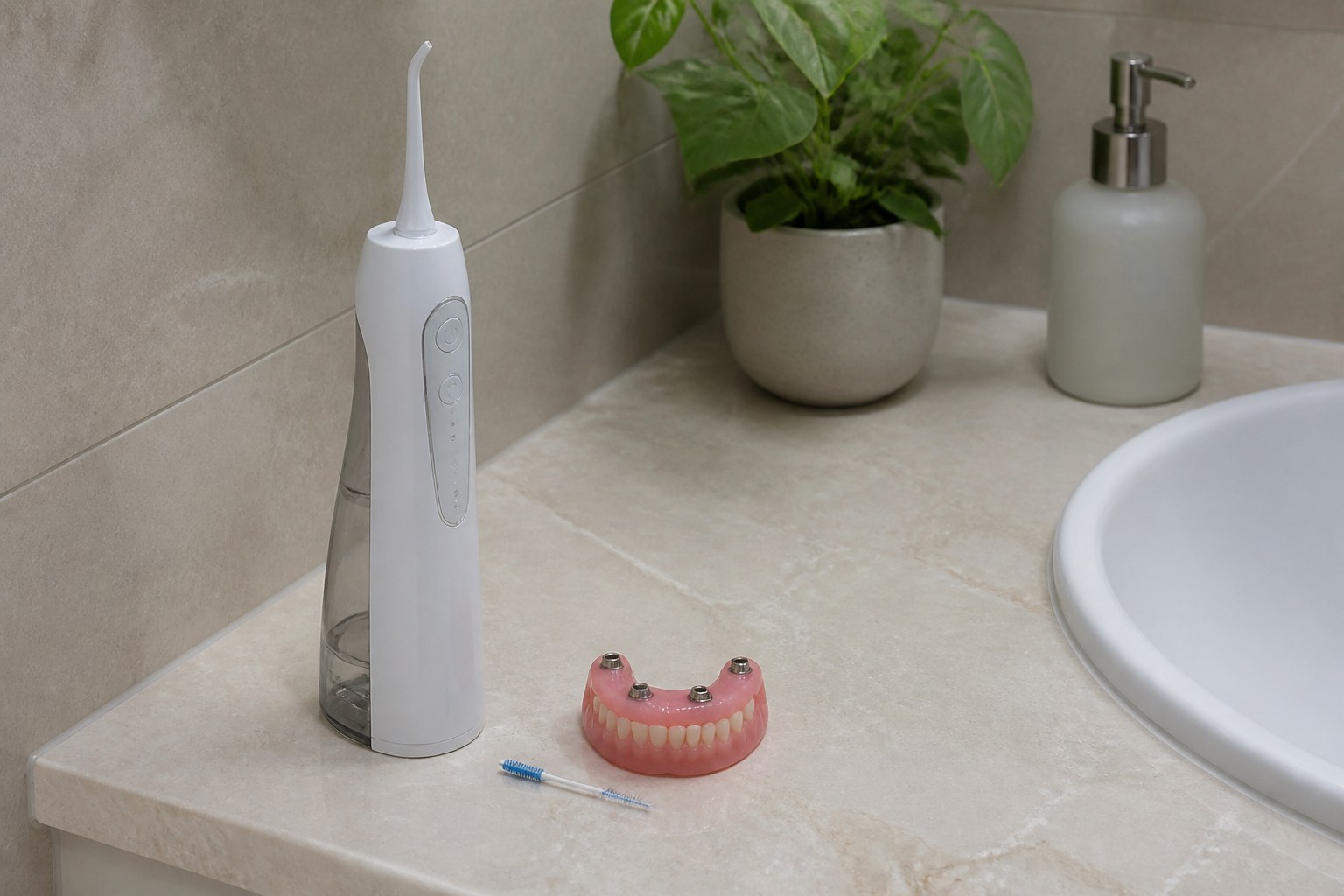
Most implant-supported dentures are designed to be removed for cleaning, even though they stay securely clipped in place while you eat and speak. A simple daily routine keeps the appliance itself free of buildup:
- Remove the denture exactly as your dentist showed you. Implant-supported dentures release with a specific motion, and forcing it the wrong way can stress the attachment points.
- Rinse off food debris right after eating if you are able to, so plaque and food particles do not sit against the attachment points all day.
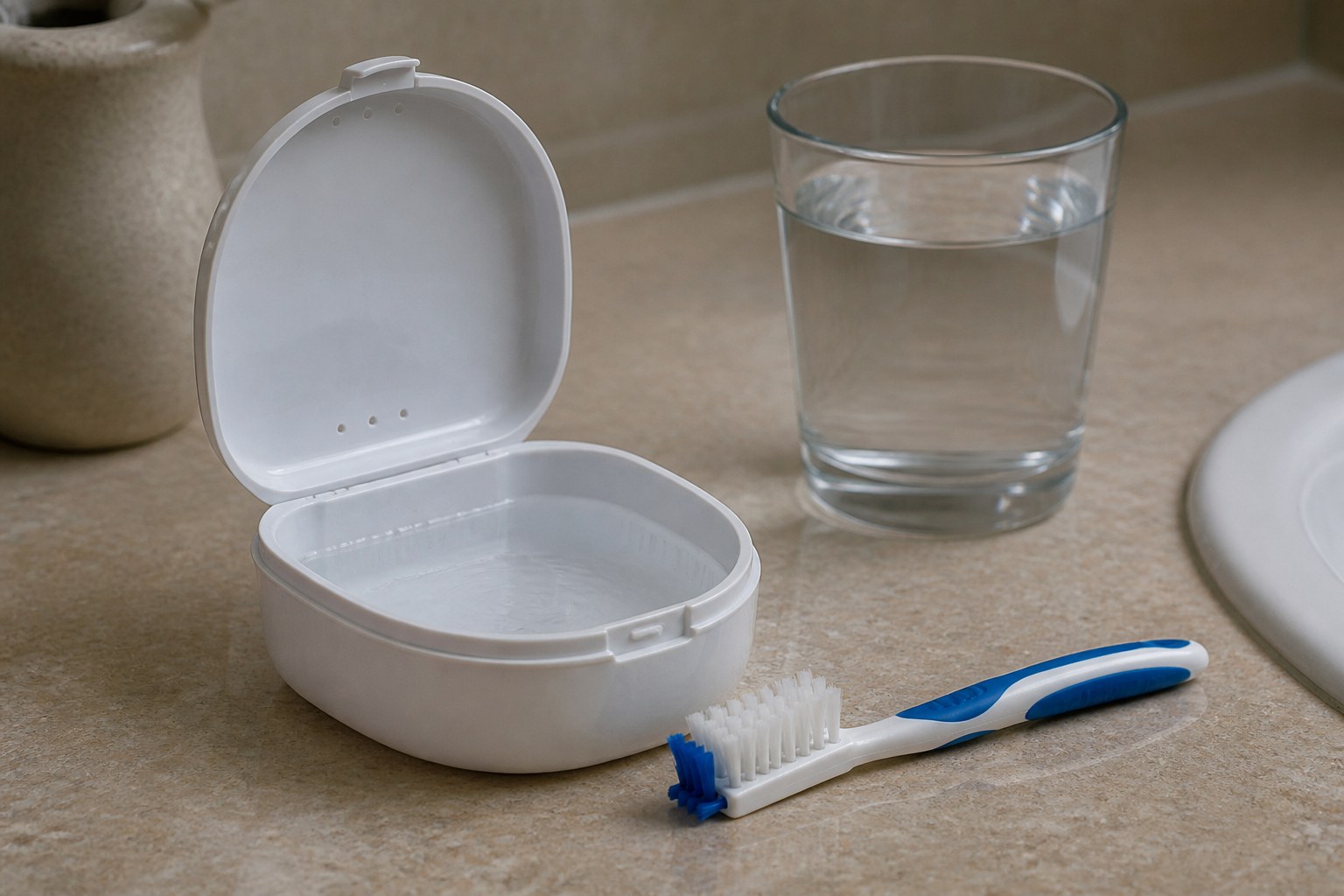
- Brush the denture with a soft brush and a non-abrasive cleanser made for dentures. Regular toothpaste can be too abrasive and scratch the surface, which gives bacteria more places to hide over time.
- Soak it as your dentist recommends in a denture-cleaning solution, following the specific instructions given for your device rather than a generic routine.
Clean Around the Implants, Not Just the Denture
The part of this routine that is easy to miss is that the implants and the gum tissue around them need their own attention, separate from cleaning the denture:
- Use a water flosser or a soft interdental brush around each implant to clear away plaque that a regular toothbrush cannot reach.
- Clean the attachment points, sometimes called locators, where the denture clips onto the implants, since buildup here is a common cause of loosening.
- Brush any remaining natural teeth and your gums with a soft-bristled brush, the same as you would without a denture in place.
What to Avoid
A few habits work against implant-supported dentures rather than helping them:
- Hard-bristled brushes or abrasive toothpaste, which can scratch the denture material and roughen surfaces where plaque collects.
- Hot water, which can warp the acrylic base of the denture over time.
- Skipping the nightly removal your dentist recommended, since giving the gum tissue and implants a break is part of what keeps them healthy.
- Ignoring a denture that feels looser than usual, which is often the first sign that an attachment point needs adjustment.
Signs Something Needs Attention
Contact your dentist if you notice:
- the denture feels looser or clicks more than it used to when you talk or chew;
- gum tissue around an implant looks red, swollen, or bleeds when you clean around it;
- a persistent bad taste or odor that does not go away after cleaning;
- discomfort or pressure at one specific implant site; or
- visible wear, cracking, or a chip in the denture material itself.
Why the Extra Care Is Worth It
Implant-supported dentures are chosen specifically because they hold more securely and function more like natural teeth than a traditional denture. That stability comes from the implants themselves, which is exactly why keeping those implants healthy matters so much. Gum disease around an implant, called peri-implantitis, is one of the leading reasons an otherwise well-made implant-supported denture starts to feel loose or uncomfortable, and it is largely preventable with the daily routine above plus regular professional checkups.
How This Differs From a Traditional Removable Denture
A traditional denture rests on the gum ridge and relies on suction or adhesive to stay in place, so the main concern is fit and irritation of the soft tissue underneath. An implant-supported denture instead clips onto anchors in the bone, which is what makes it feel more secure and lets you bite with more confidence. That security comes with a trade-off: the attachment points are small, precise parts that need regular cleaning and occasional professional adjustment, in addition to the soft-tissue care a regular denture already required. Patients who switch from a traditional denture to an implant-supported one sometimes assume the old cleaning habits are enough, but skipping the extra steps around the implants is the most common way problems start. If you are still weighing the two, our dentures page covers the full and partial dentures we offer.
Do You Take Them Out at Night?
Most dentists recommend removing an implant-supported denture at night so the gum tissue and implants get a break from constant pressure, and so you can complete the soaking and cleaning steps described above. Some designs are intended to stay in place longer between removals — your dentist will tell you which routine applies to your specific device rather than a generic rule, since the attachment system varies by case.
What Happens at a Professional Maintenance Visit
Beyond your daily routine at home, plan on periodic professional visits where your dentist or hygienist:
- removes the denture to check the implants, the surrounding gum tissue, and the attachment hardware directly;
- cleans areas that are difficult to reach with a toothbrush or water flosser alone;
- checks whether the locator attachments have worn down and need replacing, which is a normal part of long-term maintenance rather than a sign anything went wrong; and
- confirms the denture still seats and clips in evenly, since a bite that has shifted slightly can put uneven pressure on one implant.
How often you need this kind of visit depends on your specific case, but it is typically folded into your regular dental checkups rather than requiring a separate appointment.
How Long Should They Last?
The implants themselves, when properly cared for, are designed to last many years, and the dental literature generally reports high long-term success rates for well-maintained implants. The denture portion that clips onto the implants is a separate part, and it typically needs relining, adjustment, or eventual replacement well before the implants do, simply because it takes on daily wear the way any prosthetic does. Your dentist will let you know what to expect for your specific case, since the timeline depends on the number of implants, the attachment system used, and how consistently the daily care routine above is followed. This is exactly why the daily cleaning steps and periodic professional visits described earlier matter so much: they are the single biggest factor you control in how long the implants and the denture attached to them stay comfortable and functional.
Frequently Asked Questions
How should I use this guide for my own denture?
Use this as general information and follow your dentist’s device-specific cleaning and removal instructions.
What should I do if my denture feels loose?
Contact your dentist instead of trying to adjust the attachment yourself.
Where can I read more about cleaning removable dentures?
The American Dental Association’s denture-care guidance discusses cleaning removable dentures and access to implant abutments for cleaning.
Keep Your Implant-Supported Dentures on Track
A quick professional cleaning and check of the attachment points once or twice a year catches small issues, like a locator that needs replacing or gum tissue that needs attention, well before they turn into bigger problems. If your implant-supported dentures feel looser than they used to, or it has been a while since your last checkup, request an appointment with North Pointe Dental Center or call (239) 997-9949 to have them evaluated. Getting ahead of small adjustments now is the easiest way to keep the appliance comfortable and avoid a more involved repair later.