
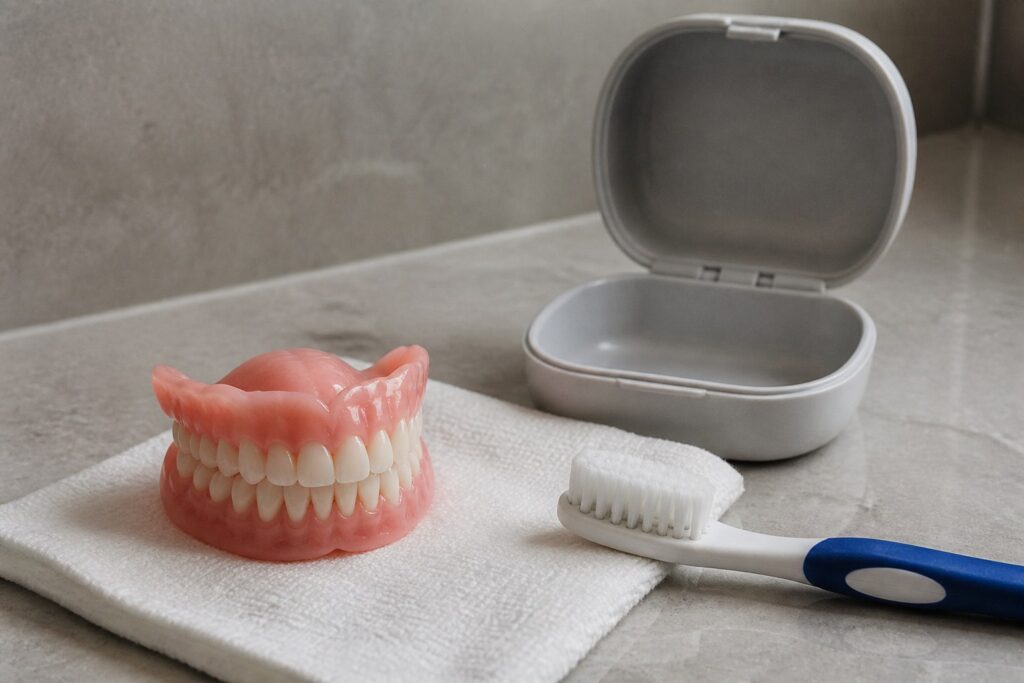
Receiving new dentures is a significant change, and it is normal for them to feel unfamiliar at first. The American Dental Association notes that new dentures may feel awkward for a few weeks, with some patients noticing looseness or minor soreness while their mouth adjusts, and that follow-up visits are a normal part of resolving those issues. Knowing what to expect during that adjustment period can make the first few weeks easier and help you recognize the difference between normal adaptation and something that needs a dentist’s attention.
The First Few Days
In the first days after getting dentures, it is common to notice increased saliva flow, a feeling of fullness in the mouth, and some difficulty with speech, particularly words that require the tongue to touch the roof of the mouth or the back of the teeth. Muscles in your cheeks and tongue are learning to hold a new appliance in place, which takes practice more than time alone.
Mild soreness at specific pressure points is also common as your gum tissue adapts to the denture base. This is different from a sharp or worsening pain, which is a signal that the fit needs to be checked rather than something to push through.
It can help to think of the first days less as a test to pass and more as an adjustment your body needs time to make. Wearing the denture consistently, rather than removing it whenever it feels unfamiliar, generally helps your muscles and tissue adapt faster than taking frequent breaks from it early on, unless your dentist has told you otherwise for your specific situation.
Eating With New Dentures
Chewing efficiently with new dentures takes practice. Most dentists recommend starting with soft foods cut into small pieces, chewing slowly, and using both sides of your mouth evenly to help keep the denture balanced. As your confidence builds, you can gradually reintroduce firmer foods.
- Start with foods like eggs, soft-cooked vegetables, and pasta.
- Cut food into small pieces rather than biting directly with your front teeth.
- Chew slowly and on both sides of your mouth to distribute pressure evenly.
- Introduce firmer or stickier foods gradually as you get more comfortable.
Very sticky or hard foods are worth avoiding early on, since they can dislodge a new denture before your muscles have learned to hold it securely.
Speaking Clearly Again
Speech often takes the longest to feel natural. Reading out loud for a few minutes each day is a simple exercise that helps your tongue and cheeks relearn where to position themselves. If a denture clicks while you talk or slips when you laugh or yawn, that typically improves as muscle control develops, but it is also worth mentioning at a follow-up visit if it persists.
Caring for New Dentures Day to Day
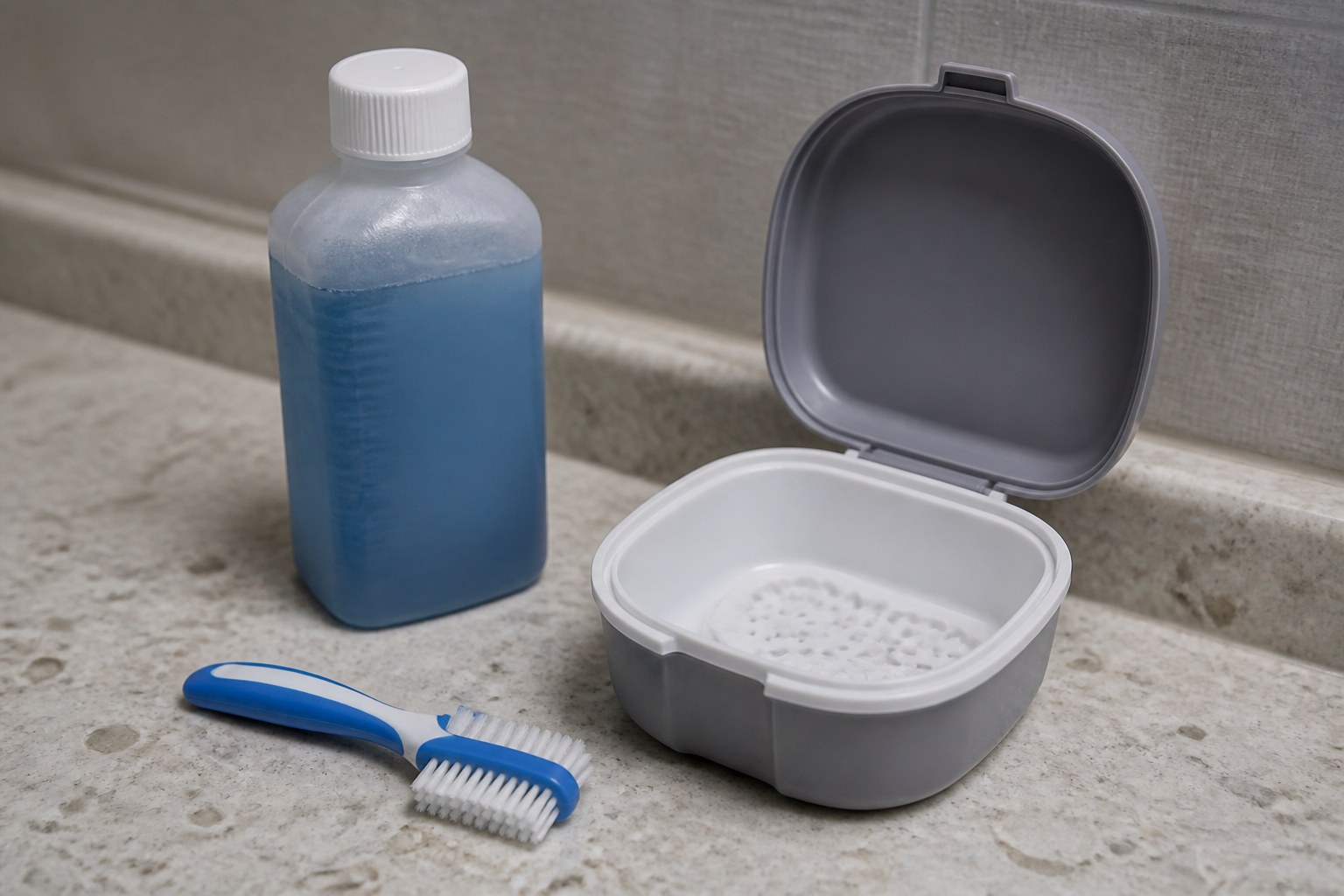
- Remove and rinse dentures after eating to clear away food particles.
- Brush dentures daily with a denture brush and a cleanser made for dentures, not regular toothpaste, which can be too abrasive.
- Handle dentures over a folded towel or a basin of water in case you drop them.
- Soak dentures overnight in water or a denture-soaking solution as recommended by your dentist, since most dentures need to stay moist to hold their shape.
- Continue cleaning your gums, tongue, and any remaining natural teeth with a soft brush every day.
When Follow-Up Adjustments Are Normal
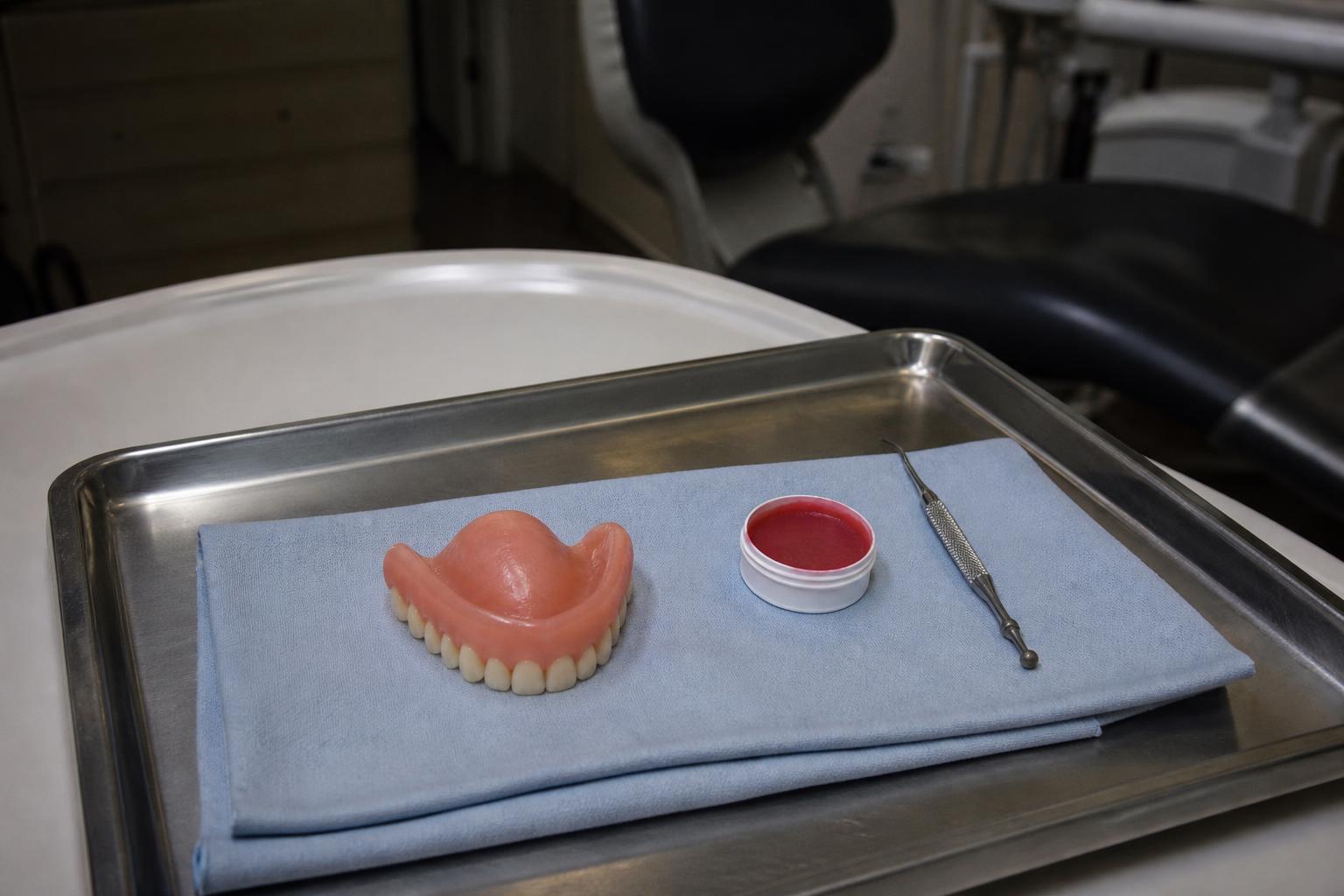
Follow-up visits after a new denture is placed are a standard part of the process, not a sign that something went wrong. Your gum tissue changes shape slightly as swelling from the fitting process resolves, and small adjustments to pressure points are common in the first weeks. Bring the denture to any scheduled follow-up, along with notes on which areas feel sore or loose, so adjustments can be targeted rather than guessed at.
When to Contact Your Dentist Sooner
Most soreness and looseness settle with time and minor adjustments, but contact the office before your next scheduled visit if you notice:
- a sore spot that is worsening rather than improving;
- a crack, chip, or visible damage to the denture;
- a denture that no longer seems to fit the way it did when you left the office; or
- signs of infection, such as ongoing redness, swelling, or a bad taste that does not resolve with cleaning.
Common Myths About the Adjustment Period
A few misconceptions tend to make the early weeks with new dentures more discouraging than they need to be. One is the idea that a well-made denture should feel completely natural from the first day; in reality, an adjustment period is expected and does not mean the denture was made incorrectly. Another is the belief that any looseness means the denture needs to be remade, when in many cases a minor relining or a small adjustment at a follow-up visit resolves it. A third is assuming speech difficulties are permanent. For most patients, reading practice and time with the appliance resolve clarity issues well before other aspects of adjustment are complete.
It is also common to assume that struggling in the first weeks means you will never eat certain foods again. In practice, most patients gradually work back up to a fuller range of foods as muscle control and confidence improve, and your dentist can offer guidance if a particular food category remains difficult longer than expected.
Supporting Your Overall Oral Health With Dentures
Wearing dentures does not remove the need for regular dental visits. Your dentist checks not only the fit of the denture but also the health of your gums, any remaining natural teeth, and the tissues of your mouth generally, since those tissues can change over time even without natural teeth present. Keeping these appointments, alongside your daily home care routine, is what keeps a denture comfortable and functional well beyond the initial adjustment period.
Frequently Asked Questions
How long does it typically take to adjust to new dentures?
Many patients feel noticeably more comfortable within a few weeks, though the exact timeline varies by person and by how many follow-up adjustments are needed.
Is it normal for dentures to feel loose at first?
Some looseness is common while your cheek and tongue muscles learn to hold the denture in place. Persistent looseness that does not improve should be evaluated at a follow-up visit.
Can I sleep in my new dentures?
Your dentist will give guidance specific to your denture type. Many patients are advised to remove dentures at night so the gum tissue can rest, and to keep the denture moist in water or a soaking solution while it is out.
What if a sore spot does not go away?
A sore spot that persists or worsens usually means a small adjustment to the denture is needed. This is a routine part of the fitting process and is easiest to resolve when addressed early rather than waiting.
Will I need my denture relined or remade eventually?
Mouth shape can change gradually over time, so a reline or remake may become appropriate down the road. Your dentist can evaluate fit at routine visits and let you know if either is recommended for your situation. Patients who struggle with a loose denture over the long run sometimes consider an implant-retained option; we compare the two in dentures vs. implant supported dentures, and our implant supported dentures page explains how they stay in place.
Adjusting to New Dentures? We Can Help
If you recently received dentures or are considering them, North Pointe Dental Center can guide you through fitting, care, and any adjustments you need along the way. Learn more about our dentures or browse our full range of dental services. To ask a question or schedule a follow-up, call (239) 997-9949 or contact our office.