
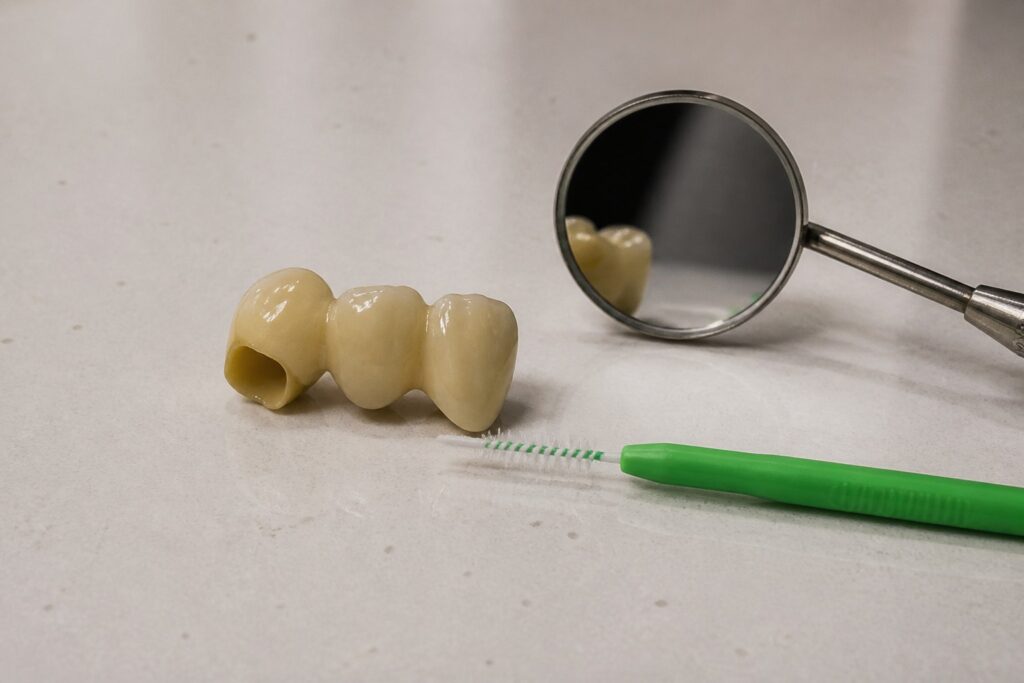
A dental bridge replaces one or more missing teeth by anchoring a false tooth, called a pontic, to the natural teeth or implants on either side of the gap. According to the American Dental Association, a bridge’s long-term success depends heavily on keeping the surrounding teeth and gums healthy, since those teeth carry the extra load of supporting the pontic. Cleaning a bridge is different from cleaning a single tooth, and the biggest mistake patients make is treating it like one.
The pontic sits above the gumline, which means plaque and food debris can collect underneath it in a way a toothbrush alone cannot reach. Left uncleaned, that buildup can lead to gum irritation around the bridge or decay on the abutment teeth that hold it in place. The good news is that a short daily routine, once it becomes a habit, keeps a bridge functioning well for years.
Why Standard Brushing Isn’t Enough
A toothbrush cleans the visible surfaces of a bridge the same way it cleans natural teeth, but it cannot get underneath the pontic where it meets the gum. That space is where most bridge-related problems start. Bacteria that accumulate there can inflame the gum tissue or work their way toward the abutment teeth, which is a particular concern because those teeth were shaped down to support the bridge and rely on a tight, clean seal to stay protected.
This is why cleaning a bridge properly requires a couple of extra tools beyond a toothbrush and toothpaste. None of them are complicated, and your dental team can show you the technique at a normal cleaning or checkup visit.
Step-by-Step: Cleaning a Dental Bridge at Home
- Brush twice a day as usual. Use a soft-bristled toothbrush and fluoride toothpaste on the bridge and your remaining natural teeth, angling the bristles toward the gumline the same way you would for any tooth.
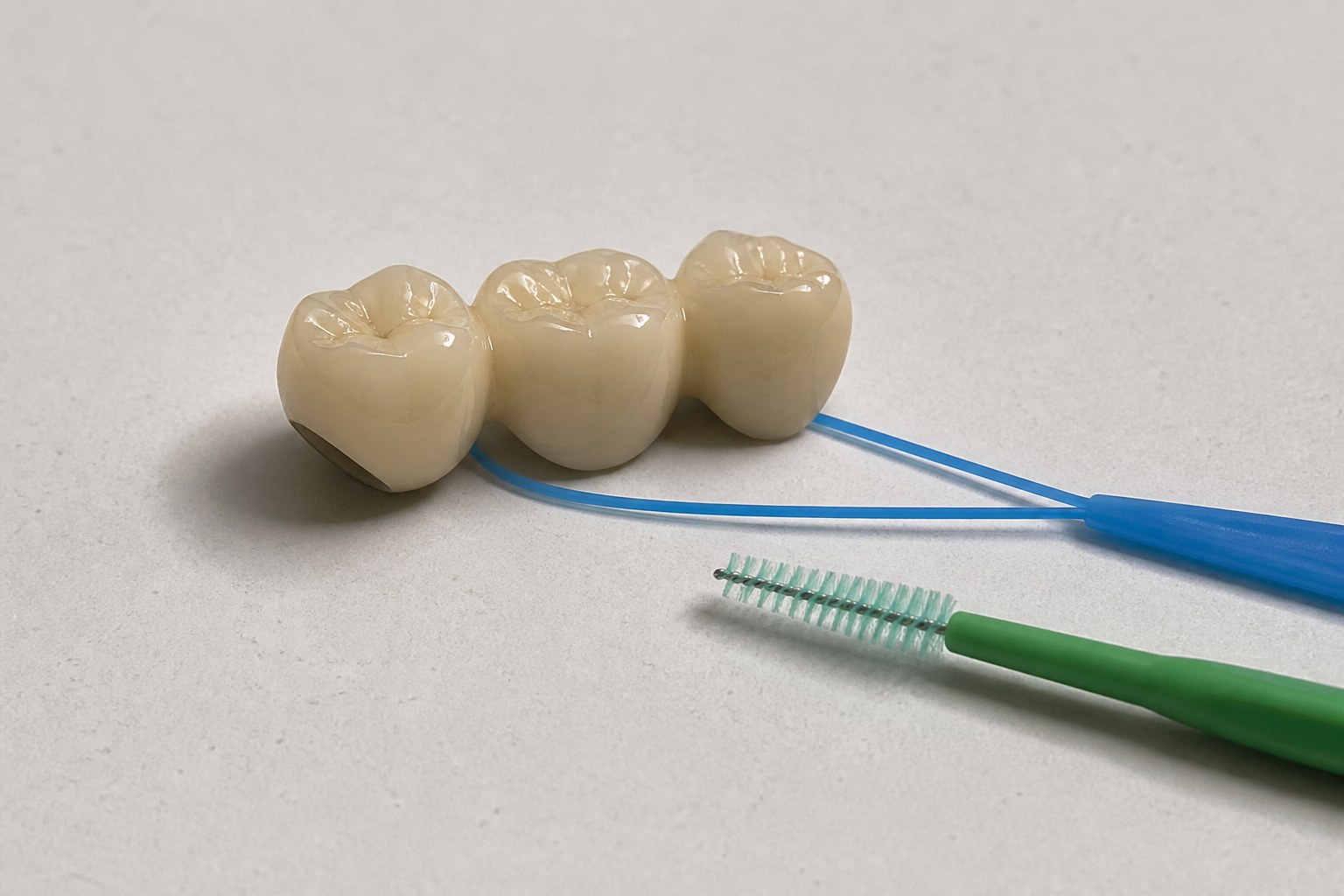
- Use a floss threader or superfloss under the pontic. A floss threader has a stiff end that guides regular floss underneath the false tooth so you can clean the space between the pontic and the gum, then wipe along the sides of the abutment teeth.
- Try an interdental brush for the connector points. These small, cone-shaped brushes fit into the tight spaces where the bridge meets the gum and abutment teeth, dislodging debris a floss threader might miss.
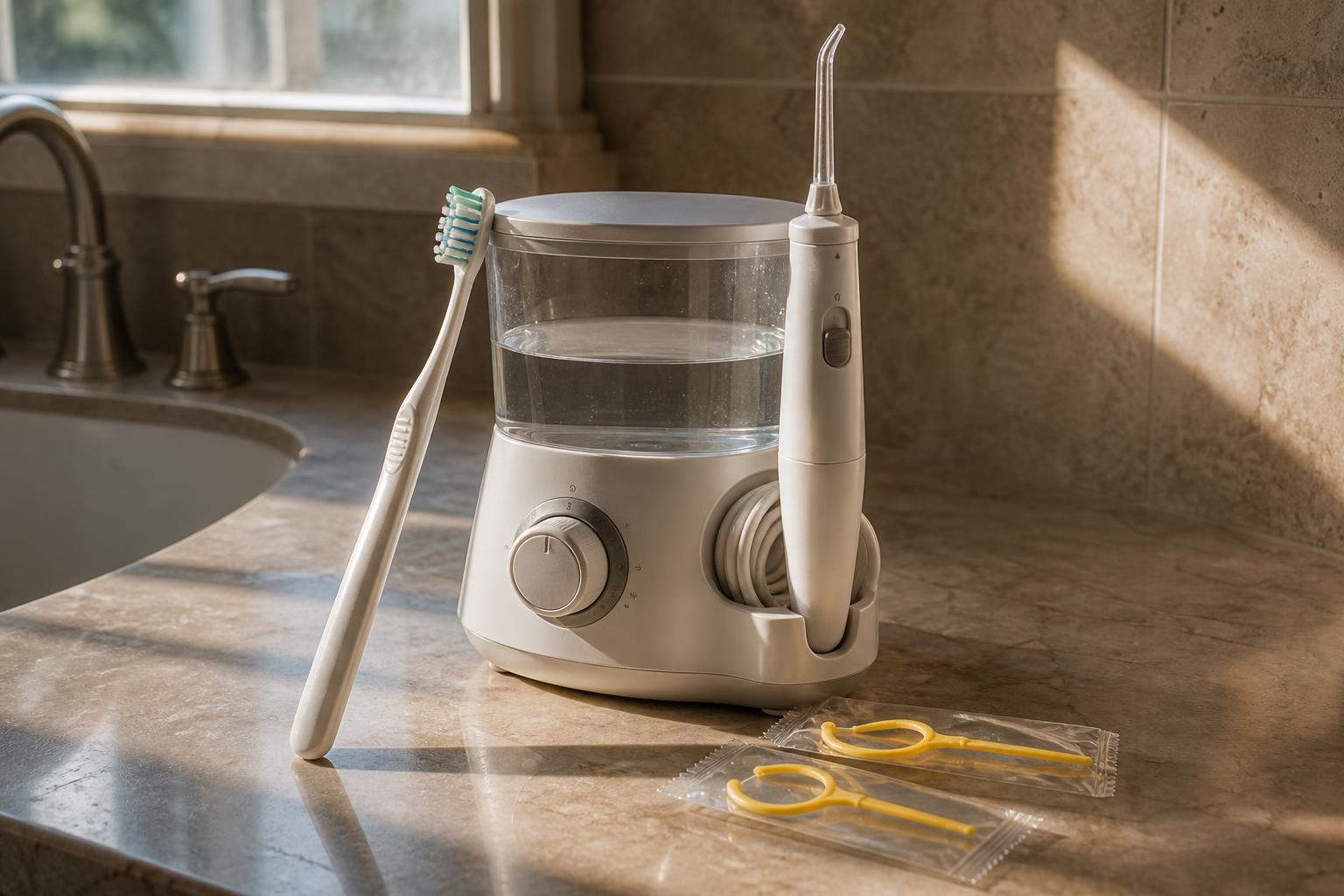
- Consider a water flosser. A water flosser can rinse under and around the pontic with a steady stream of water, which many patients find faster and easier to stick with daily than threading floss by hand.
- Rinse with an antimicrobial mouthwash if your dentist recommends one. This is not a substitute for the steps above, but it can help reduce bacteria in areas that are harder to reach mechanically.
Signs Your Bridge Needs Attention
Even with a good home routine, it helps to know what to watch for between checkups. Contact the office if you notice:
- persistent bad breath or an unusual taste near the bridge;
- gum redness, swelling, or bleeding around the abutment teeth;
- a bridge that feels loose, rocks slightly, or shifts when you bite down;
- new sensitivity in the teeth supporting the bridge; or
- food that seems to trap in the same spot no matter how carefully you clean.
Some of these signs can point to a cleaning gap that is easy to correct with a technique adjustment. Others may mean the fit needs to be evaluated. Either way, catching a problem early is usually simpler to manage than waiting until it affects the abutment teeth.
Keeping the Rest of Your Mouth in the Routine
A bridge replaces the teeth it covers, but it does not reduce the importance of caring for everything else in your mouth. The natural teeth next to and opposite the bridge still need regular brushing, flossing, and checkups, and healthy gums throughout your mouth make it easier for the bridge itself to stay stable. If you grind your teeth at night, mention it to your dentist, since that habit can put extra strain on a bridge over time.
Diet matters too. Very sticky or hard foods can dislodge or damage a bridge, especially in the months after it is placed. Your dentist can tell you whether any habits are worth adjusting based on how your specific bridge was designed and placed.
Building a Routine That Actually Sticks
The tools involved in bridge care are small enough to travel with you, and most patients find it easier to stay consistent by pairing the extra steps with something they already do daily. Keeping a floss threader or interdental brush next to your toothbrush, rather than in a drawer, removes one of the biggest reasons the habit gets skipped. If a water flosser is part of your routine, using it right after your evening brushing, before you feel ready to be done for the night, tends to work better than trying to fit it in earlier when you are more likely to rush.
It also helps to think of bridge care in two parts: the part that looks like normal brushing, and the part that specifically targets the space under the pontic. Once those two habits are separated in your mind, it is easier to notice if one of them has quietly fallen off over a busy week, and to pick it back up before it becomes a pattern.
What Your Dentist Checks at a Bridge-Focused Visit
At a routine cleaning or checkup, your dental team can do things a home routine cannot. They can see and feel under the pontic with instruments designed for that purpose, check whether the bridge still fits tightly against the abutment teeth, and take an X-ray if there is any concern about decay developing where it would not yet be visible. These visits are also a good opportunity to have your specific cleaning technique reviewed, since small adjustments in angle or tool choice can make a noticeable difference in how thoroughly the space under the bridge gets cleaned.
Frequently Asked Questions
How long does it take to get used to cleaning a bridge?
Most patients need a few weeks to build the habit of using a floss threader or interdental brush daily. It becomes faster with repetition, similar to learning any new part of a hygiene routine.
Can I use regular floss instead of a threader?
Regular floss cannot pass under the pontic on its own because the bridge is attached on both sides. A floss threader, superfloss with a stiffened end, or a water flosser is needed to clean that space effectively.
How often should a bridge be checked professionally?
Your dentist will recommend a schedule based on your bridge, your gum health, and your overall dental history. Routine checkups allow the team to look underneath the pontic and evaluate the abutment teeth in ways a home routine cannot replace.
What happens if plaque builds up under a bridge for a long time?
Extended plaque buildup can irritate the gum tissue or contribute to decay on the abutment teeth. This is why the under-pontic cleaning steps matter as much as brushing the visible surfaces.
Do I need any special products, or will a standard drugstore floss threader work?
A standard floss threader, superfloss, or interdental brush from a drugstore is generally suitable. Your dentist can point you toward a specific size or style if your bridge has a particularly tight or unusual space to clean.
Questions About Your Bridge?
If you have a bridge or are considering one, North Pointe Dental Center can walk you through the fit, care, and maintenance that apply to your specific case. Learn more about our dental bridges or browse our full range of dental services. To ask a question or schedule a visit, call (239) 997-9949 or contact our office.